Dress codes
White tie, black tie, cocktail, semiformal or smart casual: what each code means for her and for him, and how to adapt it to the weather and the time of day.
Style · by Brinddi · 5 min read · July 2026
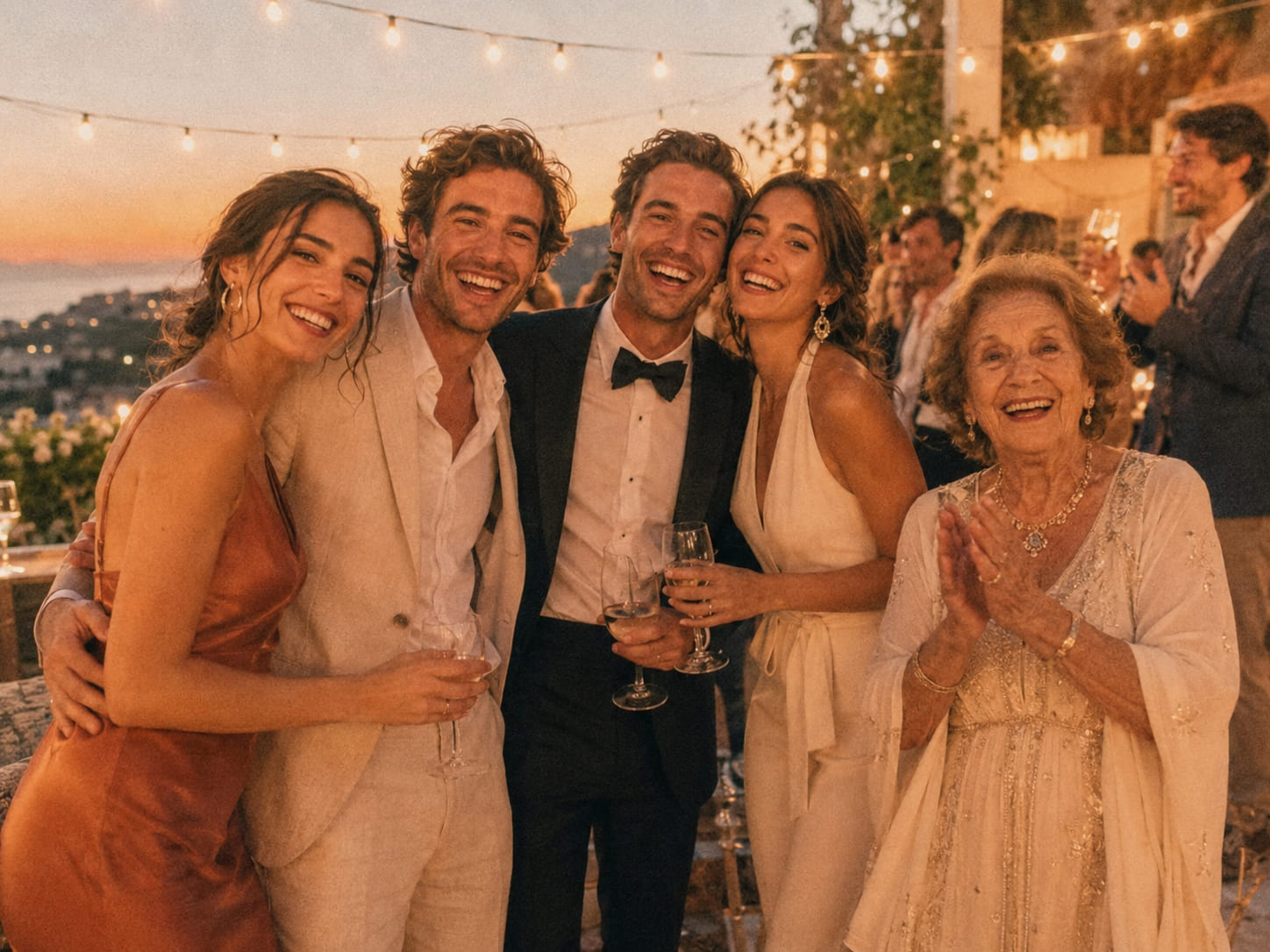
- There are 5 codes. From most to least formal: white tie, black tie, cocktail, semiformal and smart casual.
- The time decides. 6:00 PM is the line: anything that starts later calls for more formality.
- When in doubt, go half a step up.
- At weddings there are 4 off-limits shades: white, ivory, bone and pale champagne.
- On grass or sand, a stiletto sinks in 3 steps. A block heel spreads the weight and holds up.
"White tie," says the invitation. Tailcoat or tuxedo? Floor-length or knee-length? There are 5 dress codes, and the card almost always has the clues to tell you which one applies.
The clues are the time, the place, the paper and the wording. What the card doesn't tell you is the weather or what the ground is like, and that's where most people get it wrong.
The 5 codes, from most to least formal
- White tie. Tailcoat, after 7:00 PM. It barely exists outside state galas.
- Black tie. Tuxedo, for events that start at 6:00 PM or later.
- Cocktail. Suit and knee-length dress, from 4:00 PM on.
- Semiformal. Jacket and trousers, which can be different shades. Afternoon and early evening.
- Smart casual. Chinos and a blazer with no tie, for lunches, gardens and the beach.
Going half a step up means moving 1 rung higher on this list.
The clues in the invitation
- The time. 6:00 PM is the classic line between day and night, and anything that starts later calls for more formality. A 1:00 PM event and an 8:00 PM one never ask for the same thing.
- The place. A ballroom with floor-length tablecloths calls for different clothes than a garden, and a garden for different ones than an oceanfront terrace with an evening breeze.
- The paper. Gold lettering, embossing and thick 300 gsm cardstock signal formality. Bright colors and loose illustrations signal something more relaxed.
- The wording. If the code is written out, it overrides the other 3 clues.
When in doubt, go half a step up. Loosening your tie takes 2 seconds, and halfway through the event nobody's going to find you a jacket.
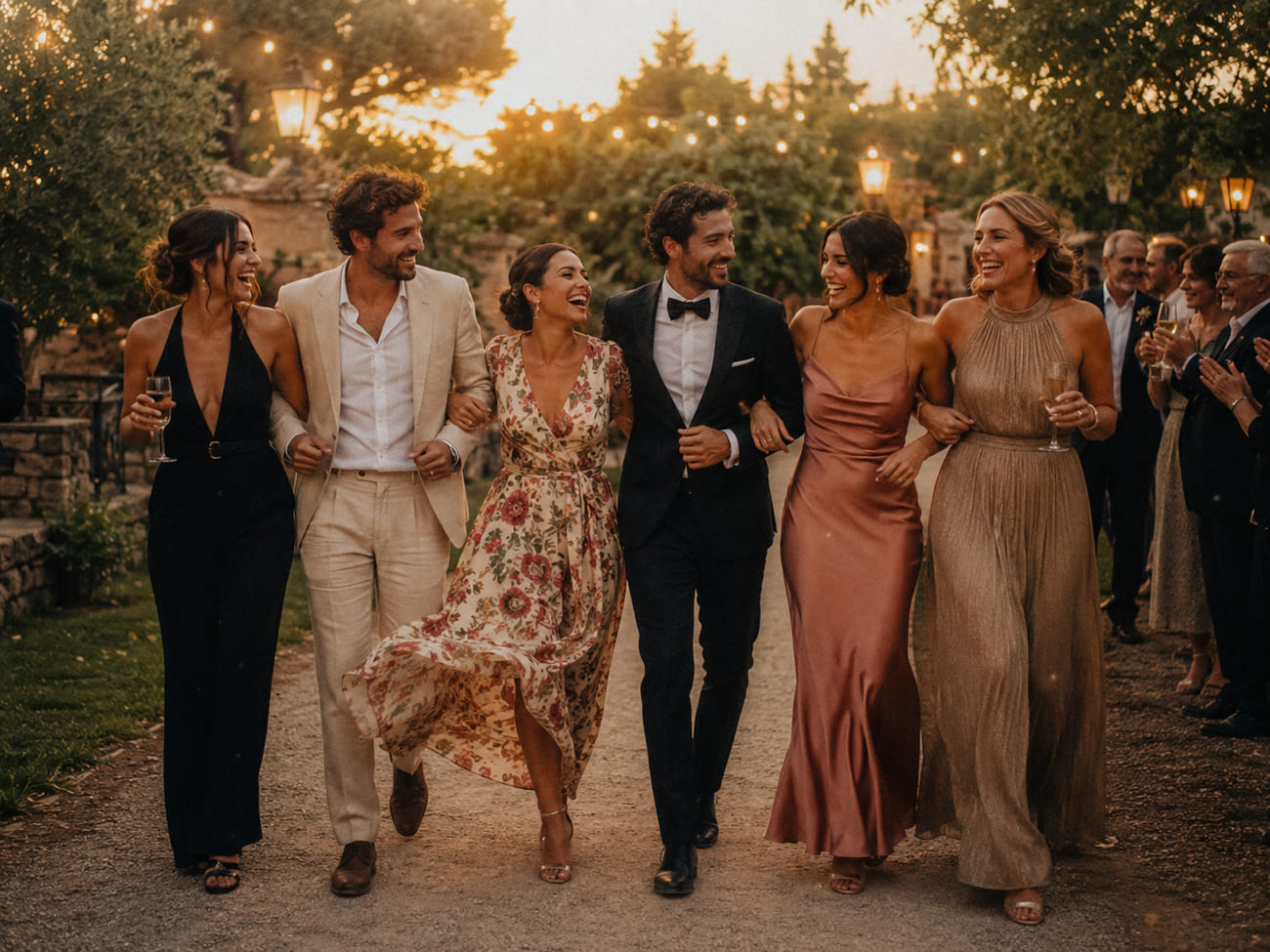
White tie
It's the most formal code and the rarest. It shows up at state galas and, once in a long while, at a very formal wedding.
For him, a black tailcoat, the jacket with tails that fall to the knee in back, with trousers with 2 satin stripes down the sides, a white piqué vest, a wing-collar shirt, a white bow tie and patent leather shoes. Tailcoats are rented. Book one 3 weeks ahead and leave 1 more week for alterations, because the sleeve length gets adjusted after the first fitting.
For her, a floor-length gown, with a hem that grazes the floor without dragging. Long gloves if you're up for it, and real jewelry. An updo holds up better over the 6 hours a gala usually lasts.
A regular suit or a short dress stands out in the first group photo.
Black tie
It's the code for evening weddings, and the easiest of the 5 to get right because almost everything is set.
For him, a tuxedo with a black or midnight blue jacket, a white shirt, a black bow tie and patent leather shoes. That black bow tie is where the code gets its name. Without a tuxedo, a sharp dark suit with a sober tie will save you, though what they're asking for is the tuxedo.
For her, a long dress or a very elegant cocktail dress in a dressy fabric. Jewel tones and black almost always work. Metallics too.
"Black tie optional" means the tuxedo is welcome and a well-cut dark suit with a tie also works. It's the only one of the 5 codes that lets you choose between 2 levels.
Cocktail
It's the code afternoon weddings and corporate events usually ask for.
For her, a knee-length or midi dress, the length that ends between the knee and the ankle. This is where color and texture come in, and a dressy jumpsuit works too. Heels or dressy sandals.
For him, a full suit, with the shade depending on the time: navy, gray or earth tones before 6:00 PM and darker after. The tie is optional, and a well-pressed shirt without a tie looks polished at a midday cocktail event.
Jeans and sneakers are out.
Semiformal
It's 1 step below cocktail and it's for afternoon or early evening events.
For him, a suit or a jacket and trousers in different shades, a dress shirt and an optional tie. A navy blazer with gray trousers almost never misses, and they're 2 pieces you probably already own.
For her, a midi dress, a dressy skirt with a blouse or a pantsuit, with less shine than for cocktail.
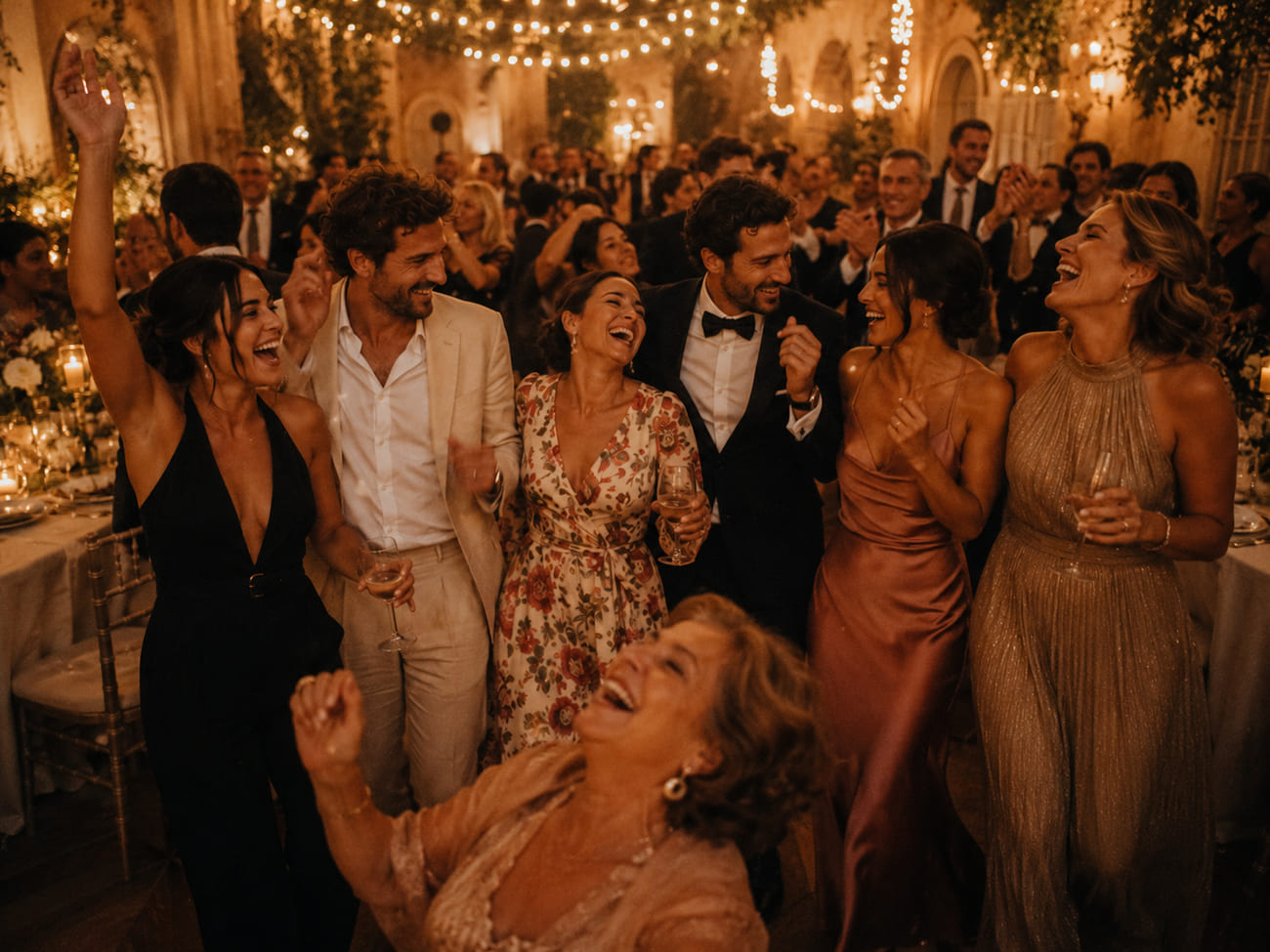
Smart casual
It's the most misunderstood of the 5 because nobody defines it. "Black tie" has meant the same thing everywhere in the world for over 100 years. "Smart casual" means whatever the host has in mind, and 2 invitations with the same wording can expect different things. If you can ask, ask.
For her, a simple dress, a skirt with a nice top, or dressy trousers with a blouse. Dressy sandals, heeled espadrilles or flats.
For him, chinos or dress trousers with a shirt or a polo. A blazer with no tie takes it up a whole level. Loafers, casual shoes or spotless white sneakers if the setting allows.
Ripped jeans, T-shirts with big prints, rubber flip-flops and athletic wear are out, even if the card says "casual."
No white at a wedding
At a wedding there are 4 shades to steer clear of: pure white, ivory, bone and pale champagne. With flash, any of the 4 reads as a wedding dress.
A stiletto sinks into the grass in 3 steps.
There are 2 more colors worth thinking twice about. All black at a very bright daytime wedding. At night it rarely draws attention. And bold red, which can steal the spotlight. At a quinceañera, the color to avoid is the quinceañera's own, and it's usually on the invitation.
The weather and the ground
The same cocktail event plays out differently at 32°C (90°F) and humid than at 2,600 meters (8,500 ft) of altitude, where the temperature drops 10°C (18°F) as soon as the sun goes down.
- Above 28°C (82°F), linen, cotton or light blends. Polyester doesn't breathe, and after 2 hours you feel it.
- In the cold or at altitude, layers: a shawl, a dressy trench coat or a wool blazer. The outer layer shows up in the photos too.
- At the beach or in a garden, go half a step down and change your shoes. A stiletto puts all your weight on less than 1 square centimeter and sinks into the grass in 3 steps. A block heel 4 centimeters wide spreads the same weight over 16 times the surface.
- Daytime calls for light fabrics and little shine. Nighttime, heavier fabrics and deeper colors.
A wedding keeps you on your feet for 6 to 8 hours, from the ceremony to the last dance. If your shoes are new, wear them around the house for 2 afternoons first.
Five questions before you head out
- Does it match the code on the invitation, or is it half a step above?
- If it's a wedding, am I far from the bride's 4 shades?
- Does it work for the weather and the time?
- Can the shoes handle the real ground and 6 hours on my feet?
- Do I feel like myself in this?