How to choose a DJ or music
DJ, band or your own playlist, and the night's music in 5 moments, with the length and volume of each.
Music · by Brinddi · 4 min read · July 2026
- A DJ for almost everything, a band for one block of the night, and your own playlist only with fewer than 40 people and someone in charge.
- Before you hire, ask to see a video of the DJ working a crowd that's dancing, and put hours, price and extras in the contract.
- Plan the music as a curve of five moments: reception, dinner, opening the dance floor, peak and close. Save your hits for the peak.
- Figure 15 to 20 songs per hour and have 30-40% extra ready in case something doesn't land.
- Always hand over your do-not-play list, and don't let the guests take over the music.
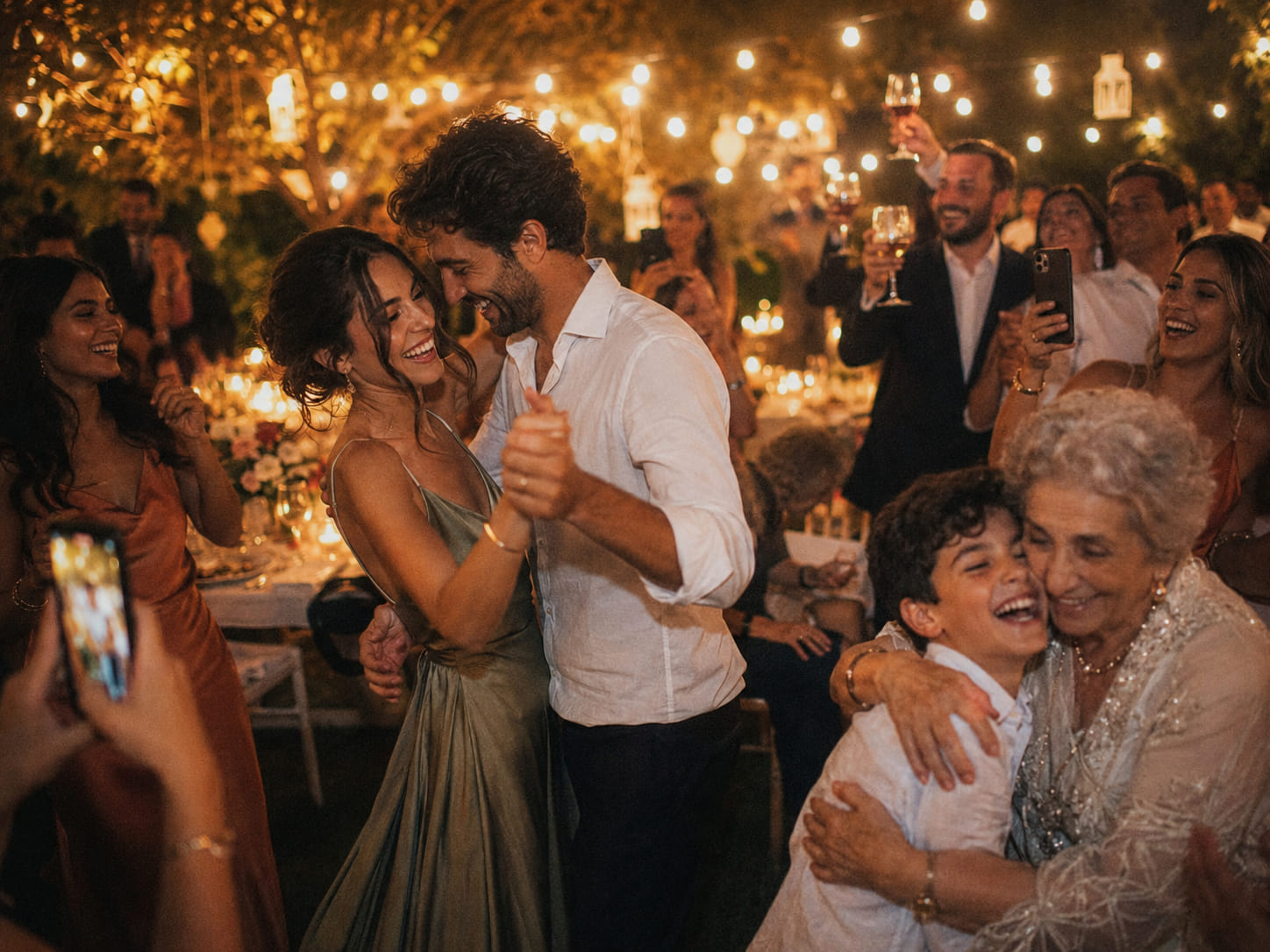
At eleven at night, with an empty dance floor, nobody remembers the decor. A full dance floor gets decided weeks ahead: who plays the music and in what order the songs go.
DJ, band or your own playlist
DJ
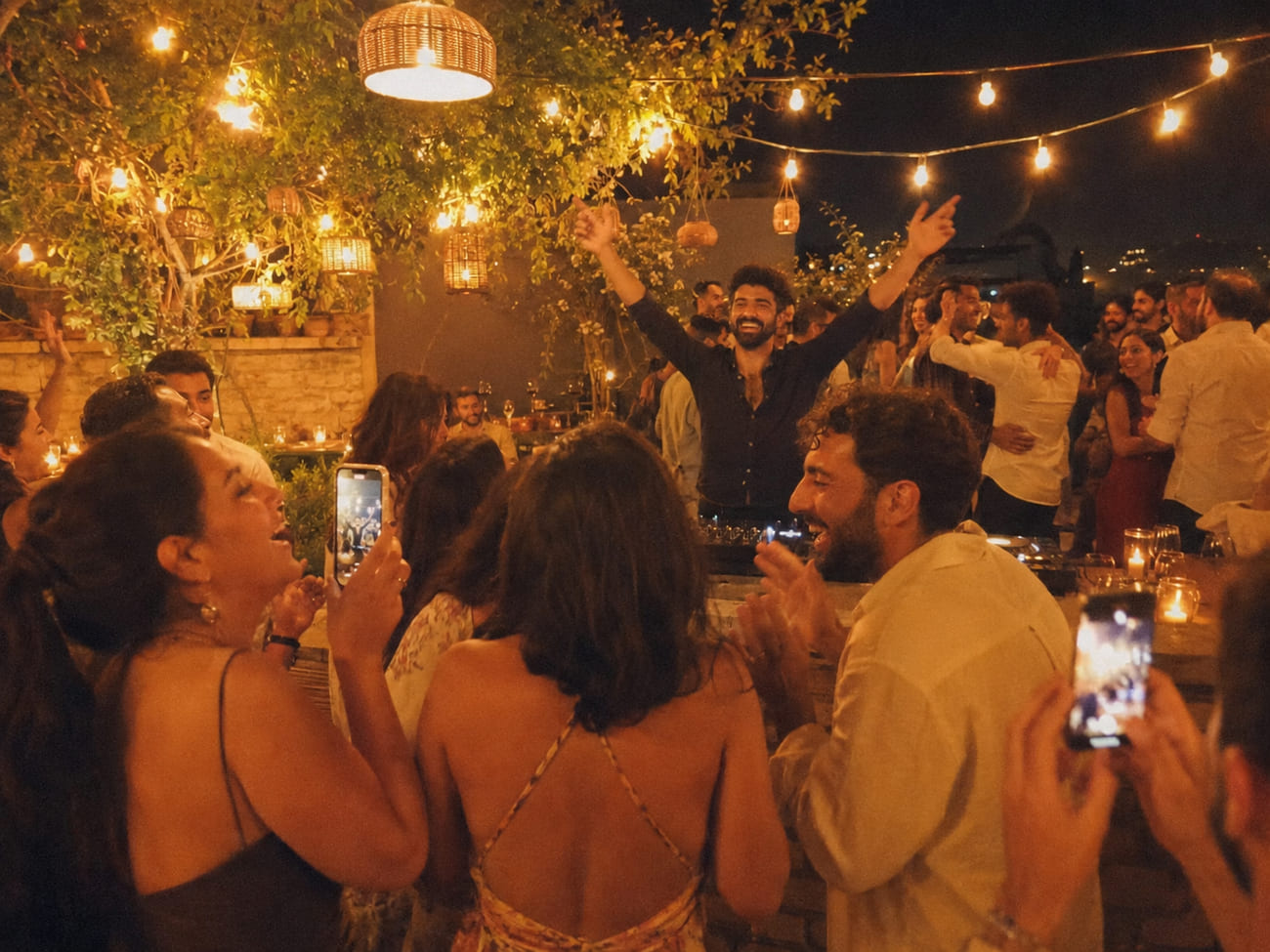
A good DJ notices when the dance floor cools off and changes course in seconds. They cover everything from cocktail hour to the last song and usually cost less than a band.
Music takes about 7% of an event budget, and a professional DJ fits within that 7%. Between the cheapest and the most expensive in the same city there's a 3 to 4 times difference, depending on hours and season, so get 3 quotes. The ones who bring sound and lights charge more, and save you renting it all separately.
Live band
A decent band costs about twice as much as a DJ of the same level, and it goes up with every musician you add. They need breaks and more space, and their repertoire is shorter than a DJ's catalog.
A common solution is to hire the band for one block, whether that's the ceremony, cocktail hour or the first hour of dancing, and a DJ for the rest of the night.
Your own playlist
It's the cheapest option and it works at events under 40 people, like a birthday at home or a family lunch. With more people you need someone adjusting the music, and above 80 one speaker isn't enough.
With a playlist, nobody reads the dance floor. You need someone keeping an eye on the volume and skipping the song that didn't land, and it can't be the guest who's already five drinks in. Prepare more music than you think you'll use.
7 questions to ask a DJ before you hire them
- Can I see a video of you at a real event, with people dancing? That's where you see whether they can read a crowd.
- How do you handle guest requests? The right answer is that they take them with judgment and don't let a single guest run the night.
- What happens if equipment fails? A pro brings 2 laptops, a backup controller and extra cables, and answers without having to think.
- Do you bring sound and lights, or just mix? That decides what you need to rent separately.
- Until what time, and how much is each extra hour? That price goes in writing.
- How do we build the setlist? They should ask for your must-plays and your do-not-play list. If they don't ask anything, that's a bad sign.
- Do you MC or just play music? If you want them to announce the entrance, the toast and the cake, say so from the start.
Hours, price, extras, arrival time for setup and the cancellation policy go in the contract.
The music in 5 moments
A 5-hour event has 5 blocks of music, each with its own length and volume.
1. Reception
45 to 60 minutes, while people arrive and say hello. Soul, bossa nova, mellow indie or acoustic covers, at about 65 decibels, the volume at which 2 people can talk without raising their voices. Nobody dances here.
2. Dinner
60 to 90 minutes, a bit louder, around 70 decibels. Standards, soft pop and some jazz. The hits are saved for later.
3. Opening the dance floor
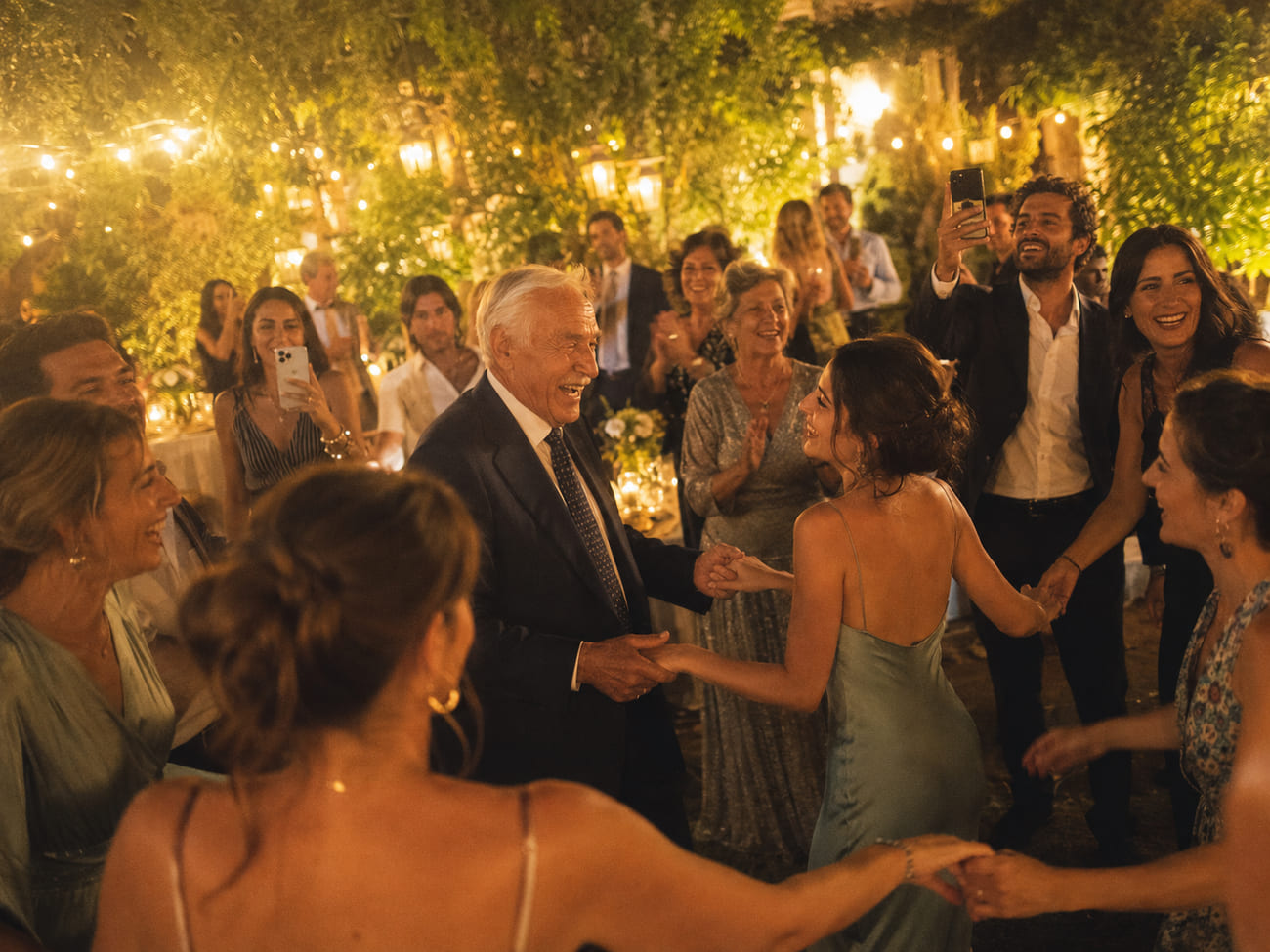
2 songs at most. A track everyone knows that crosses generations, the kind grandparents and nephews sing along to the same. If the first one flops, the dance floor takes twice as long to fill.
The dance floor fills up once 8 or 10 people are already dancing.
4. The peak
2 to 3 hours. Reggaeton, cumbia, salsa, merengue, danceable pop and current hits, at 90 or 95 decibels, where conversation is over. Your biggest songs go here.
5. The close
20 to 30 minutes, with the most euphoric songs or with 2 slow ones. End while 70% of the people are still there.
How many songs you need
A song lasts 3 to 4 minutes, so an hour is 15 to 20 songs. A five-hour event needs 75 to 100 as a base, plus 30% or 40% in reserve in case something doesn't land.
With a DJ you don't need the full list. Give them your 10 to 15 must-plays, your do-not-play list and an idea of the vibe. With your own playlist you do need the long list, organized by block.
The mistakes that empty the dance floor
- Trying to please everyone. If you add a genre for every guest, none of them gets the floor going. Choose one style for the night and leave short stretches for other tastes.
- The wrong volume. If dinner starts at peak volume, people can't talk, they get tired sooner and the dance floor fills later.
- Burning through the hits at dinner. You reach the peak with nothing left.
- Not handing over the do-not-play list, with your ex's song and the genre you hate. The DJ can't guess.
- Giving up control. Taking requests is fine, but if the controller or the phone gets passed around, the curve breaks.
- Silence between songs. With your own playlist, 2 seconds is enough for people to sit down, and getting them back up takes 3 or 4 songs. Use continuous play and turn off ads between tracks.
- Not testing the sound. Test it 2 to 3 hours before, at the venue with the lights on, which is when electrical noise shows up. A loose cable mid-event is 20 minutes of dead dance floor.