8 color palettes for events
Each one with its color codes and the light it works in. Five are for daylight and three for the evening.
Inspiration · by Brinddi · 5 min read · July 2026
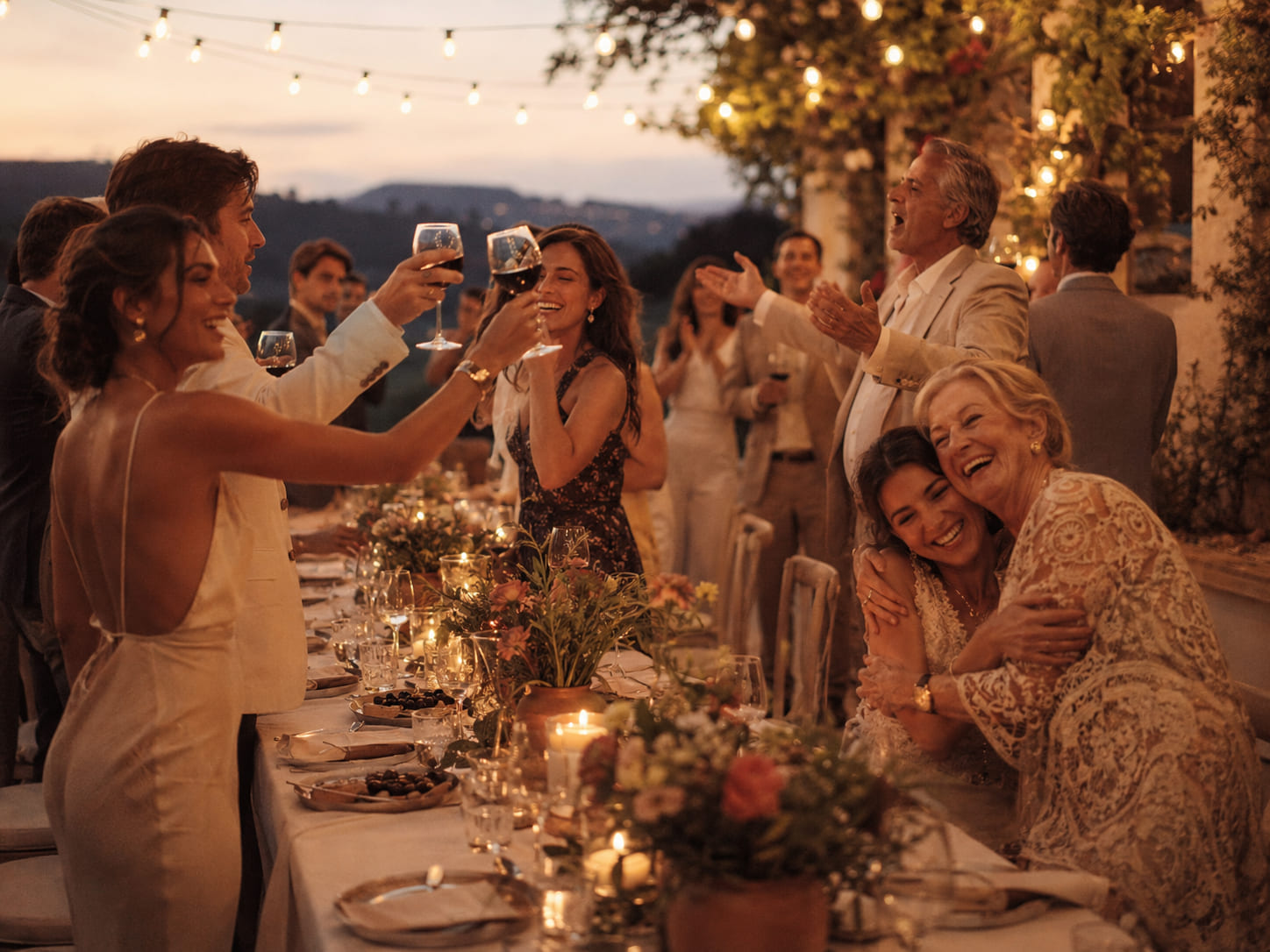
- All 8 palettes come with their color code: without the number, "terracotta" is ten different colors depending on who you ask.
- Light beats color. A ballroom at night sits around 2700 K, and below 3000 K blues and lilacs turn gray.
- Choose the palette for the light during the hours that matter most to you, which is almost always the evening.
- The 60-30-10 rule: tablecloth and chairs 60%, flowers and napkins 30%, dishes and candles 10%.
- Photograph your samples at the venue, at the real time of day and under its lights. Turn off your phone's automatic color adjustment.
A lavender that looks gorgeous on the swatch looks gray under the warm bulbs of a ballroom at night. Before the palette, look at what time your event will be and under what light.
The 8 palettes below come with their color codes and the light they work in, and each one is broken down into flowers, linens and attire.
1. Mediterranean terracotta
Terracotta #C4633F, bone cream #F0E6D2 and olive green #6B7148, with an accent of burnt mustard #C9922E. For daylight.
It suits daytime outdoor weddings, in a garden or on an estate, especially in spring and fall. In natural light, the terracotta and mustard come out almost exactly like the swatch.
- Flowers: peach roses, terracotta dahlias, eucalyptus and olive branches trailing from the centerpieces.
- Linens: a cream or natural linen tablecloth, with terracotta napkins tied with twine.
- Attire: an olive green or beige suit for him. Bridesmaids in earth tones that differ from each other.
2. Burgundy and antique gold
Burgundy #6B1F2E, antique gold #B08D57, charcoal black #1C1C1C and blush pink #D9B3AE. For warm evening light.
It's for evening events in fall and winter: formal weddings, year-end company dinners or an elegant-themed quinceañera. Under warm bulbs, the burgundy and gold get more intense.
- Flowers: dark red roses, wine-colored ranunculus and a touch of blush pink to lighten it.
- Linens: a black or burgundy tablecloth, gold flatware and lots of tall candles.
- Attire: long dresses in wine or black. For him, a dark tuxedo with gold details.
3. Sage and champagne
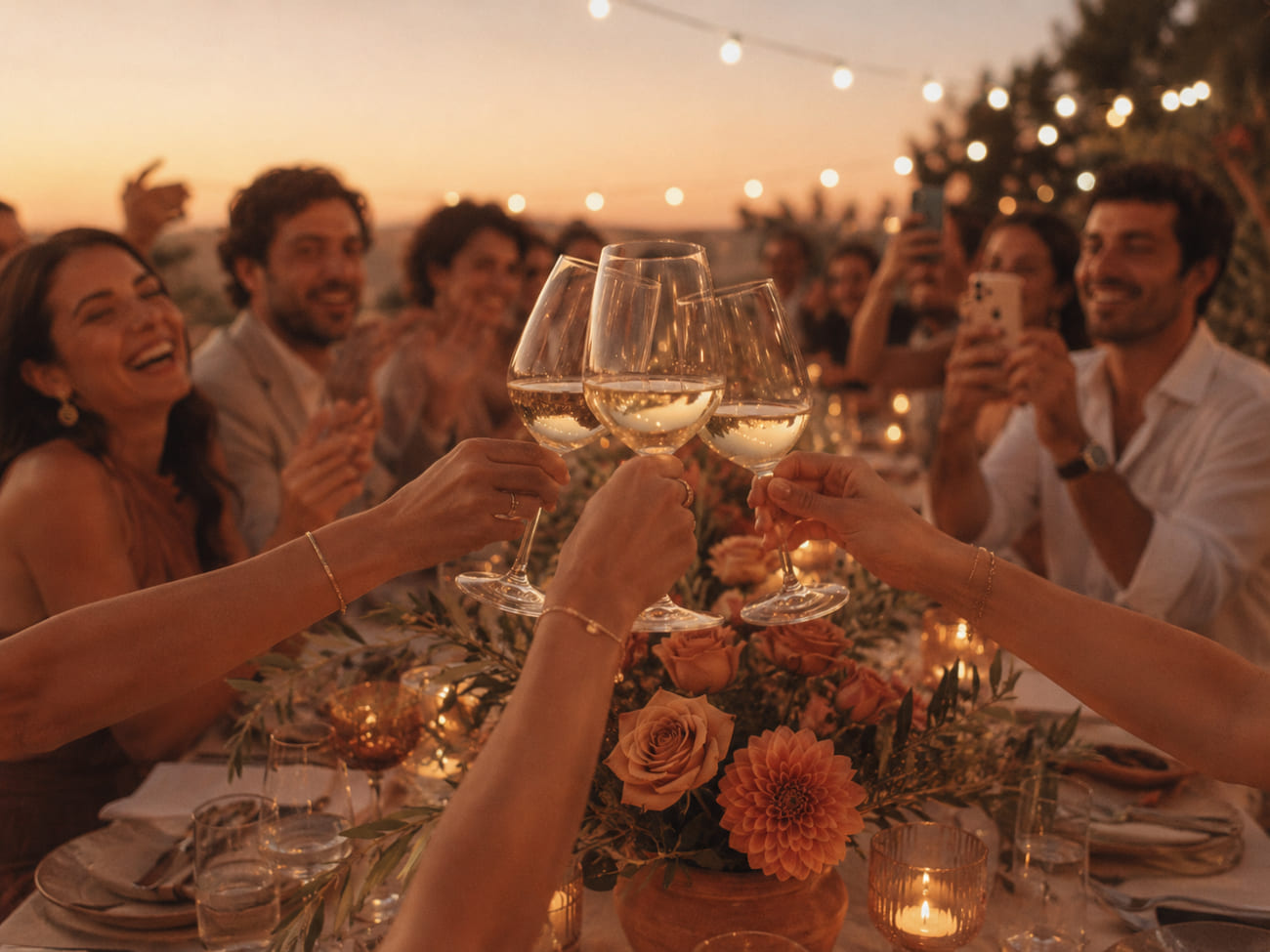
Sage green #9CAF88, champagne #F0DFC4, ivory #FBF6EE and soft gold #D4B483. For daylight.
It works for almost any spring or summer event.
- Flowers: white and cream roses, silver dollar eucalyptus and a bit of baby's breath for volume.
- Linens: an ivory tablecloth, a sage green table runner and classic dinnerware.
- Attire: bridesmaids in sage green, which flatters almost every skin tone. A navy or gray suit for contrast.
4. Citrus Festive
Tangerine #F0722B, fuchsia #D6296E, lemon #F2C438 and bright green #4C9A4A. For daylight, and the stronger the better.
It's for birthdays, bold quinceañeras, summer weddings on the beach or in a garden, and brunches.
- Flowers: orange gerberas, bougainvillea and small sunflowers.
- Linens: mixed-color tablecloths, printed napkins, and real lemons and oranges on the table.
- Attire: ask your guests to come in color. Whoever is being celebrated can wear white.
5. Midnight blue and copper
Midnight blue #1B2A4A, copper #B87333, slate gray #56616B and chalk white #F4F2ED. For evening light.
It suits corporate events and urban winter weddings. Under warm light the blue loses strength, and it's the copper that lights up and warms the table.
- Flowers: few and large. White roses, blue thistle and dried copper branches.
- Linens: a deep blue tablecloth, with copper candelabras, frames and table numbers.
- Attire: a midnight blue suit with a copper tie or accessories. Dresses in blue or smoke gray.
6. Earthy rose and sand
Earthy rose #C08B84, sand #D9C7A9, camel #B0885A and warm white #F7F1E8. For daylight.
The soft browns take the childish feel out of the pink. It suits daytime weddings, baby showers and quinceañeras in spring and summer.
- Flowers: dusty roses, dried pampas grass and nude and cream tones.
- Linens: sand-colored linen, white dinnerware and pink smoked glassware.
- Attire: a camel or beige suit. Bridesmaids in powder pink or nude.
7. Emerald and ivory
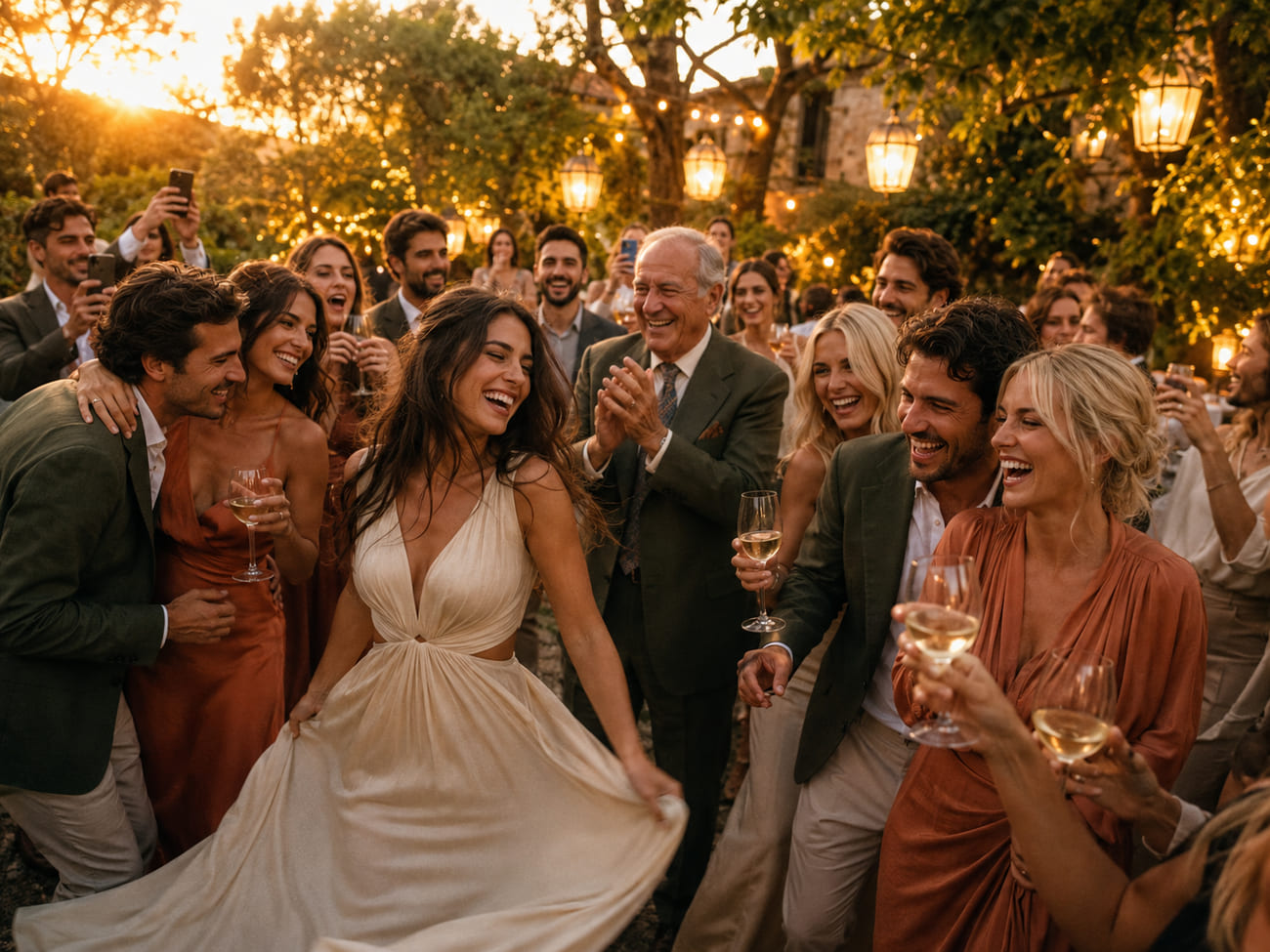
Emerald #1F6B4A, ivory #F5EFE2, gold #C9A227 and black #101010 as the anchor. For warm evening light.
It's for formal weddings and winter galas. At night the emerald looks deep and the gold shines in the candlelight.
- Flowers: lots of deep green foliage, large white roses and a touch of gold.
- Linens: an emerald or green velvet tablecloth, gold plates and ivory napkins.
- Attire: an emerald dress as the star. For him, a black tuxedo with a green or gold detail.
8. Misty lavender and sage
Muted lavender #B3A5C4, sage #9CAF88, pearl gray #D6D3CC and white #FFFFFF. For daylight, and only daylight.
It suits spring weddings and intimate ceremonies.
- Flowers: real lavender, lilac lisianthus, sage and lots of greenery.
- Linens: a pearl gray or white tablecloth, lavender napkins and translucent lilac glassware.
- Attire: bridesmaids in lavender or gray. A light gray or soft blue suit.
Light matters more than the palette
What you see is the color under the light hitting it, and in a ballroom that light changes over the course of the night. This is its temperature, in kelvins:
- Midday outdoors: about 5500 K. White, neutral light, colors look almost like the swatch.
- Golden hour: about 3000 K. Everything turns warmer. It's the time photographers pick, and it lasts 30 to 50 minutes.
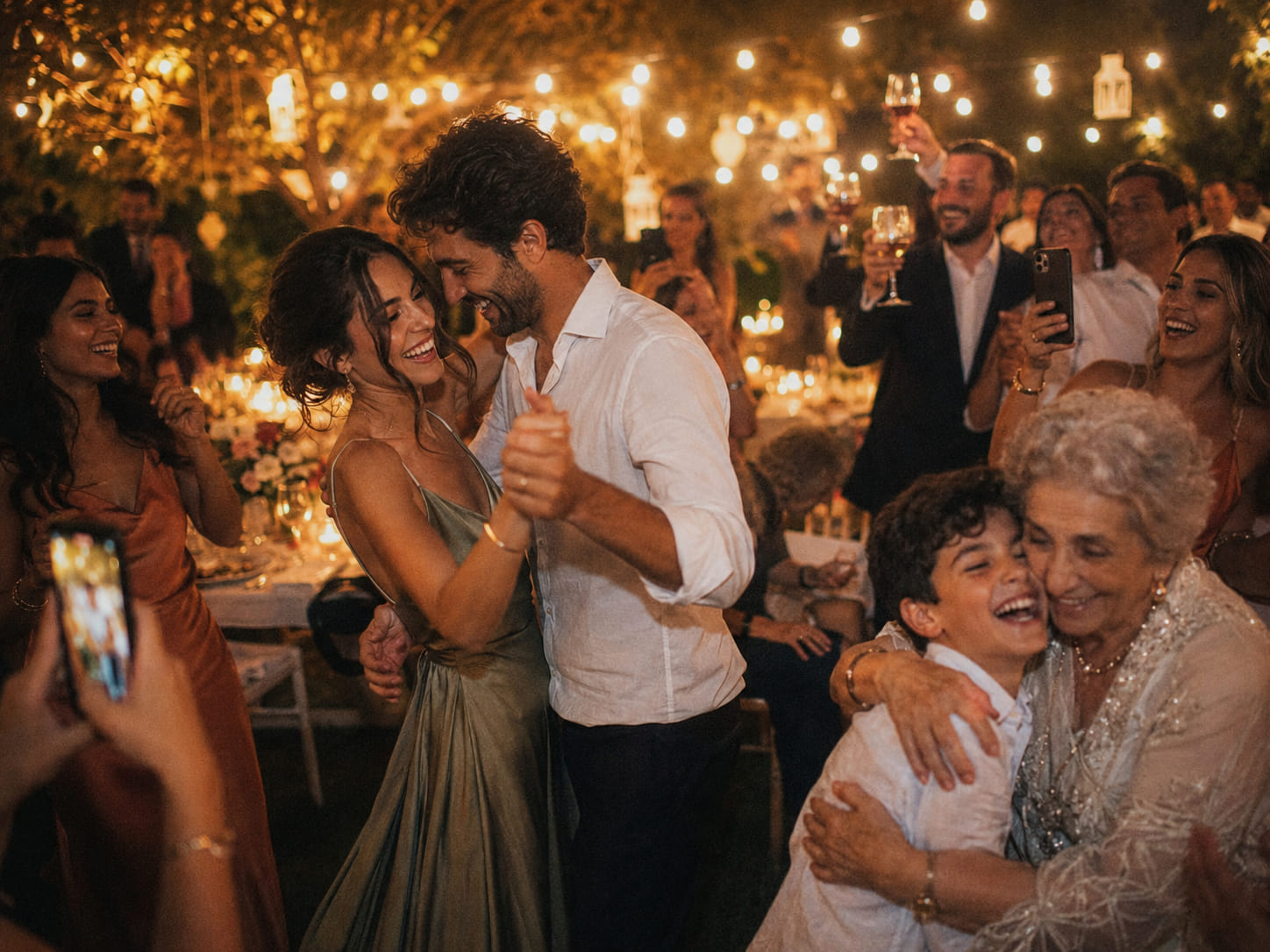
- Ballroom at night with warm bulbs: about 2700 K.
- Candlelight: around 1900 K, almost orange.
Below 3000 K, blues and lilacs turn a muddy gray, and terracotta, burgundy and gold light up. Palettes 2, 5 and 7 win at night, and 8 fades out.
With more than 3 lead colors, the table looks cluttered.
A wedding that starts at 5:00 PM and ends past midnight crosses both kinds of light. Choose the palette for the light during the hours that matter most to you, which is almost always the evening, when people dance and take the most photos.
How to choose yours
- The season. Earthy, deep tones go with fall and winter, and fresh, citrus ones with spring and summer.
- The 60-30-10 rule. A dominant color in 60% of what you see, a secondary in 30% and an accent in 10%. On a table, the tablecloth and chairs are the 60, flowers and napkins the 30, and dishes, candles and table numbers the 10. With more than 3 lead colors, the table looks cluttered.
- The test photo. Gather fabric samples, a flower and a plate, and photograph them on your phone at the time your event will be. If you can, at the venue with its lights on. Turn off your phone's automatic color adjustment, because it corrects the temperature and shows you a different color.